
October 7th, 2025
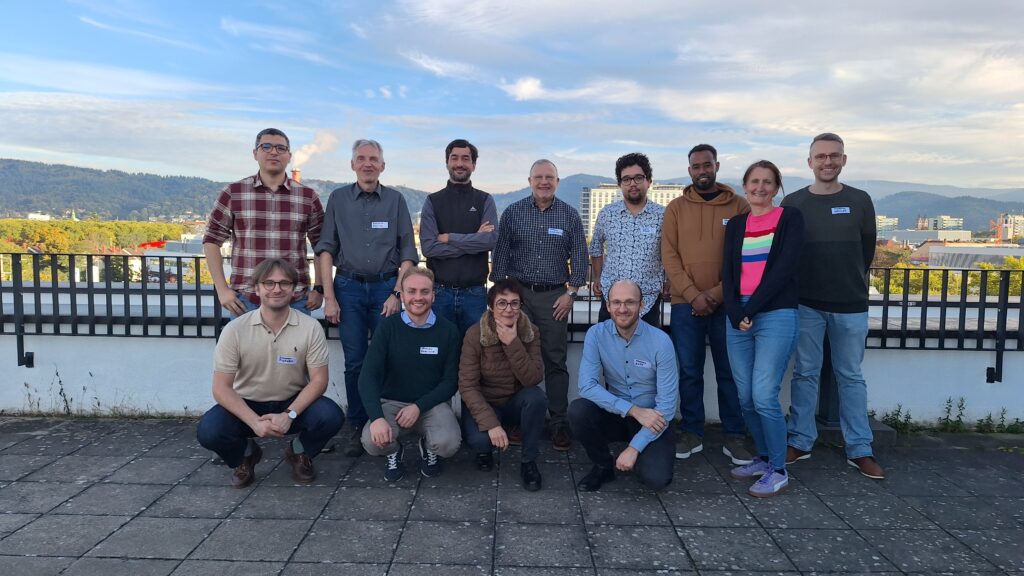
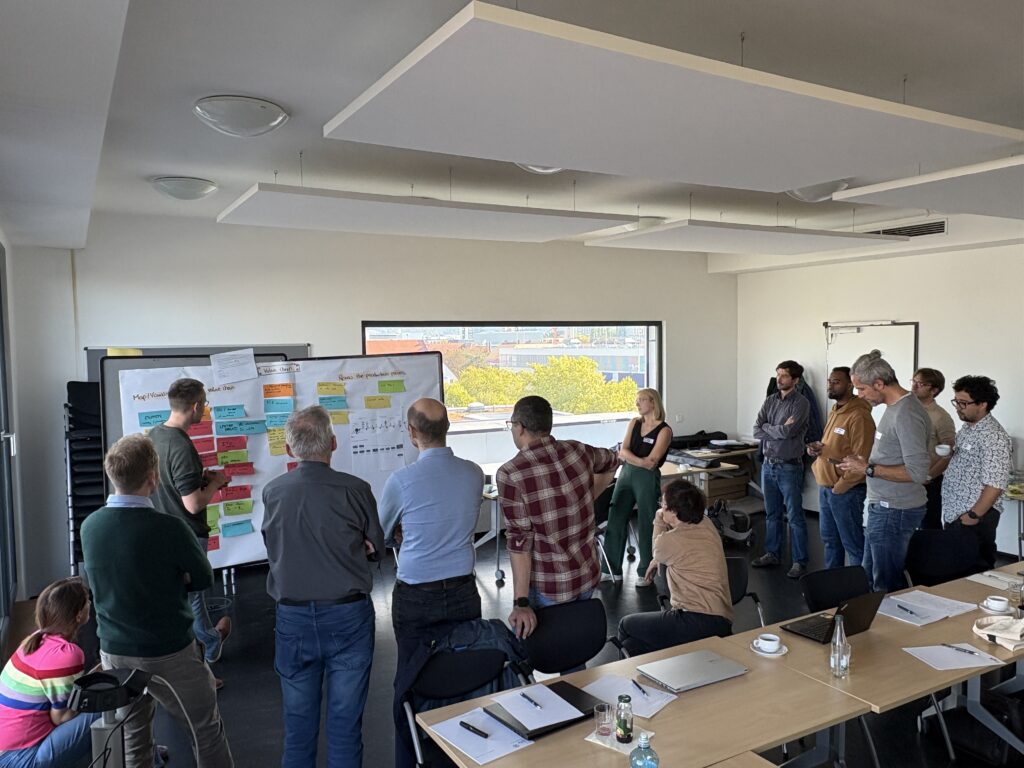
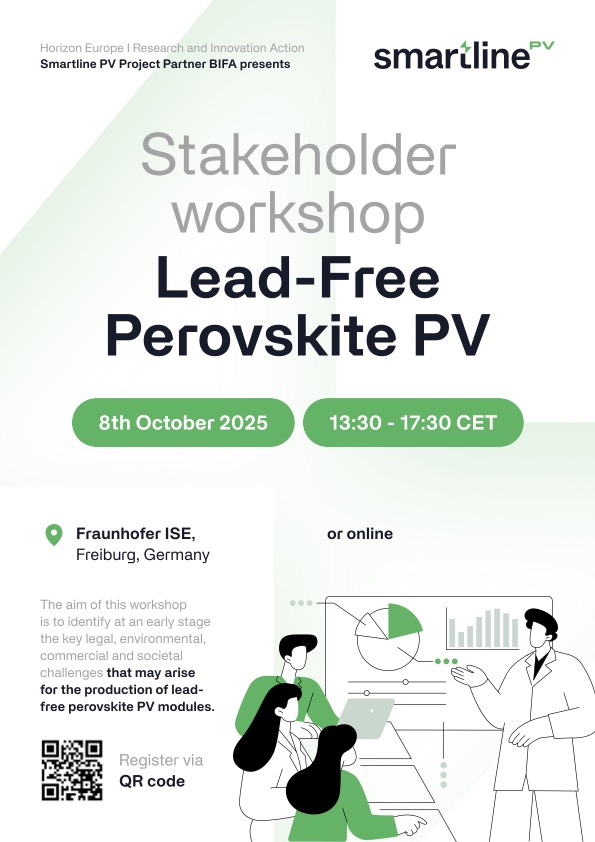
On October 7th, the first Stakeholder Workshop within the Horizon Europe project Smartline PV took place at the Fraunhofer Institute for Solar Energy Systems (Fraunhofer ISE) in Freiburg, Germany.
The event brought together experts from research, industry, certification bodies, and policy to discuss the future of sustainable, lead-free perovskite photovoltaics in Europe.
Responsible innovation and early assessment
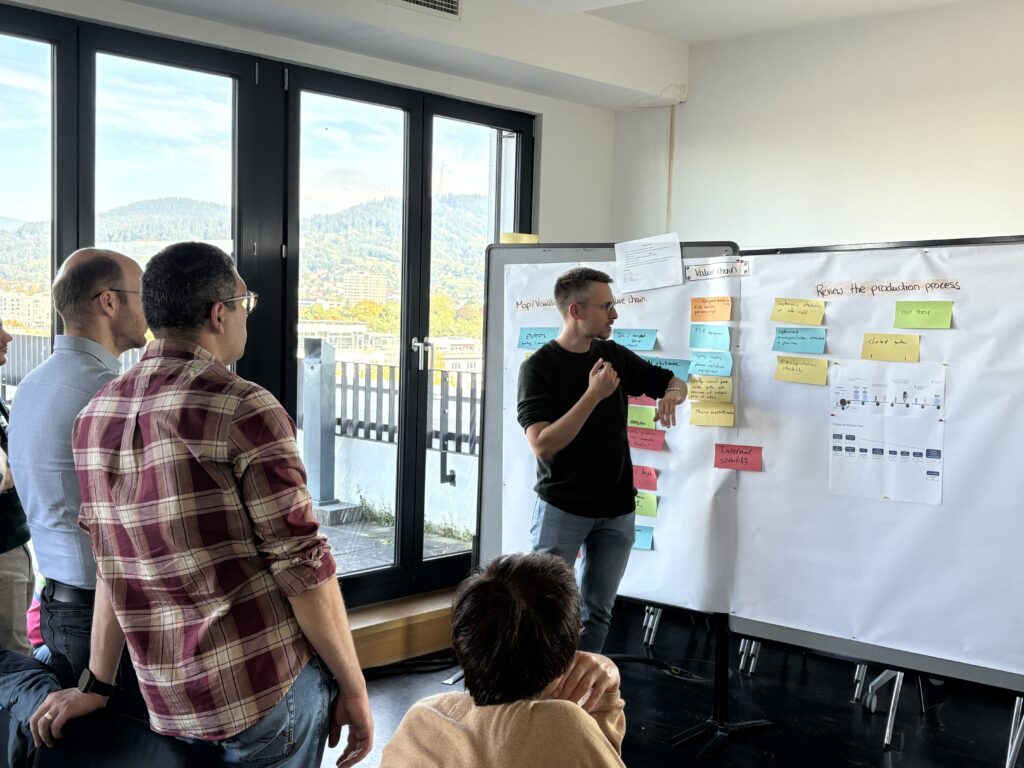
Organized by the bifa Umweltinstitut GmbH team — Markus Schönheits, Roksana Rotter, and Matthias Hämmer — and co-organized by Sophie Gledhill, the workshop focused on how legal, environmental, and societal aspects can be integrated early in the research and development process.
Participants explored how the principles of Responsible Research and Innovation (RRI) can guide the Smartline PV consortium in ensuring that innovation and sustainability go hand in hand.
In this context, the discussions emphasized the need for transparent communication, cross-sector collaboration, and anticipatory risk assessment, particularly as Europe seeks to establish a lead-free and circular value chain for perovskite photovoltaics.
Standards, certification, and industrial readiness
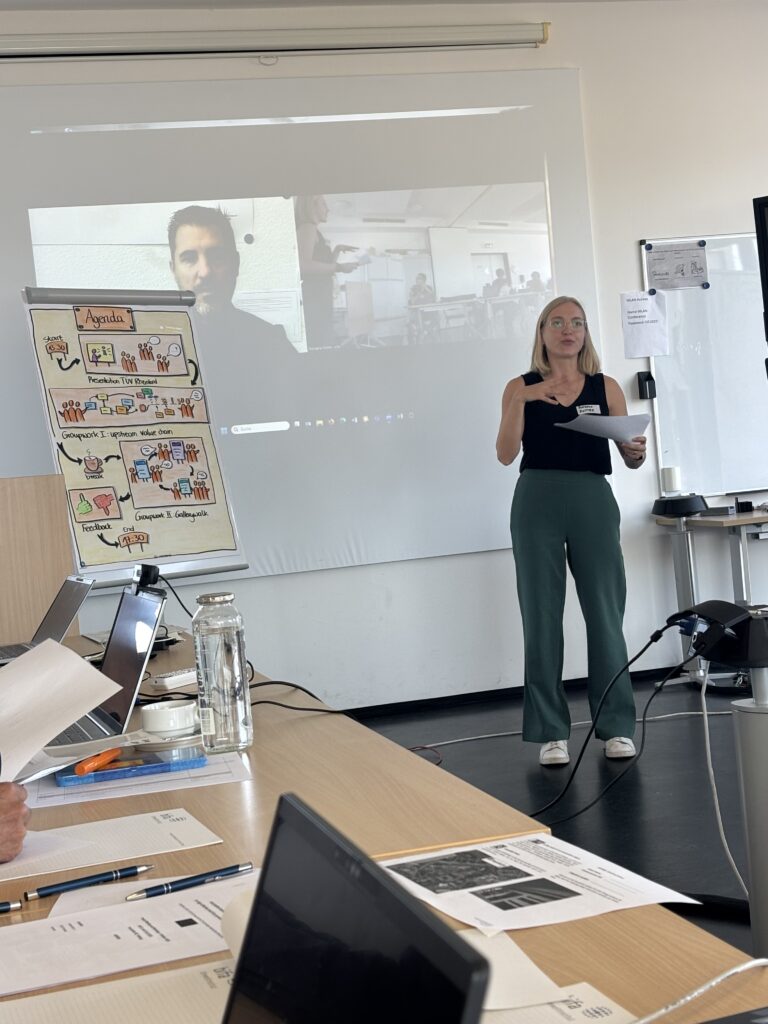
A central highlight of the day was the presentation by Eckart Janknecht (TÜV Rheinland Group), who outlined the current landscape of international PV module standards, testing frameworks, and certification pathways.
He identified key challenges for emerging technologies such as perovskite photovoltaics — including the absence of specific standards, long-term stability testing, and safety verification for new materials.
These insights provided an excellent basis for the subsequent discussion on how standardization and certification processes can accelerate the safe and sustainable industrialization of lead-free perovskite PV in Europe.
Further perspectives were offered by Markus Kohlstädt, Team Lead for Perovskite Technologies at Fraunhofer ISEand partner in the SuPerTandem project, who shared his experience on technology readiness, scale-up strategies, and manufacturing challenges.
His contribution highlighted the importance of interdisciplinary collaboration to bridge the gap between laboratory research and industrial production.
Challenges identified during the workshop
The discussions throughout the day revealed several key technical, regulatory, and systemic challenges that will shape the path forward for lead-free perovskite photovoltaics:
- Standardization gap: Current international PV standards are tailored to silicon-based modules and do not yet reflect the specific properties of perovskite materials, particularly for flexible and building-integrated applications.
- Durability and testing: The long-term behavior of perovskite modules under real environmental conditions remains insufficiently characterized, requiring adapted test protocols and reliability benchmarks.
- Material substitution and supply chain: Lead-free formulations are still at an early stage of optimization; ensuring both performance and environmental safety will require coordinated research and transparent communication across the supply chain.
- Regulatory alignment: The integration of perovskite PV into existing EU directives (e.g. RoHS, REACH, Construction Products Regulation) poses complex challenges that need early alignment between developers, regulators, and certification bodies.
- Public acceptance and perception: A proactive dialogue with stakeholders and the public will be crucial to build trust in the environmental and social sustainability of the technology.
These challenges underline the necessity of systemic collaboration — linking scientific progress with regulatory readiness and industrial feasibility.
Exchange and collaboration for a sustainable PV industry
The workshop demonstrated the value of open dialogue and cross-sectoral collaboration in addressing the technological and societal dimensions of perovskite innovation.
Participants agreed that the success of lead-free perovskite PV will depend not only on high efficiency and low cost, but also on its compliance with environmental and safety standards, architectural adaptability, and industrial scalability.
The Smartline PV project plays a key role in this transformation. By combining technical innovation, responsible research, and sustainability assessment, it aims to build the foundation for safe, circular, and industrially viable perovskite photovoltaics in Europe.
The stakeholder workshop at Fraunhofer ISE marked an important milestone on this path — fostering understanding, alignment, and shared responsibility among all actors involved.
We sincerely thank all contributors and participants for their valuable insights, discussions, and engagement.
Together, we are shaping the pathway towards a sustainable and safe future for perovskite photovoltaics in Europe.
Tags / Hashtags:
#SmartlinePV #Perovskite #Innovation #Sustainability #HorizonEurope #FraunhoferISE #TÜVRheinland #RenewableEnergy #BIPV #IoTPV
🇪🇺 This project is funded by the European Union through the CINEA – European Climate, Infrastructure and Environment Executive Agency.